


The November 3 midterm elections to the US Congress ended in a serious defeat for the Republican Party. According to preliminary results, Democrats won majorities in both chambers of Congress, and the scale of their success surpassed even some forecasts by Democrats’ own supporters. Although vote counting is still continuing in some states, the overall configuration of power is already clear: from January 2027, Donald Trump will have to work with a Congress controlled by the opposition, one capable of significantly complicating implementation of his domestic agenda and tightening oversight of White House foreign policy decisions.
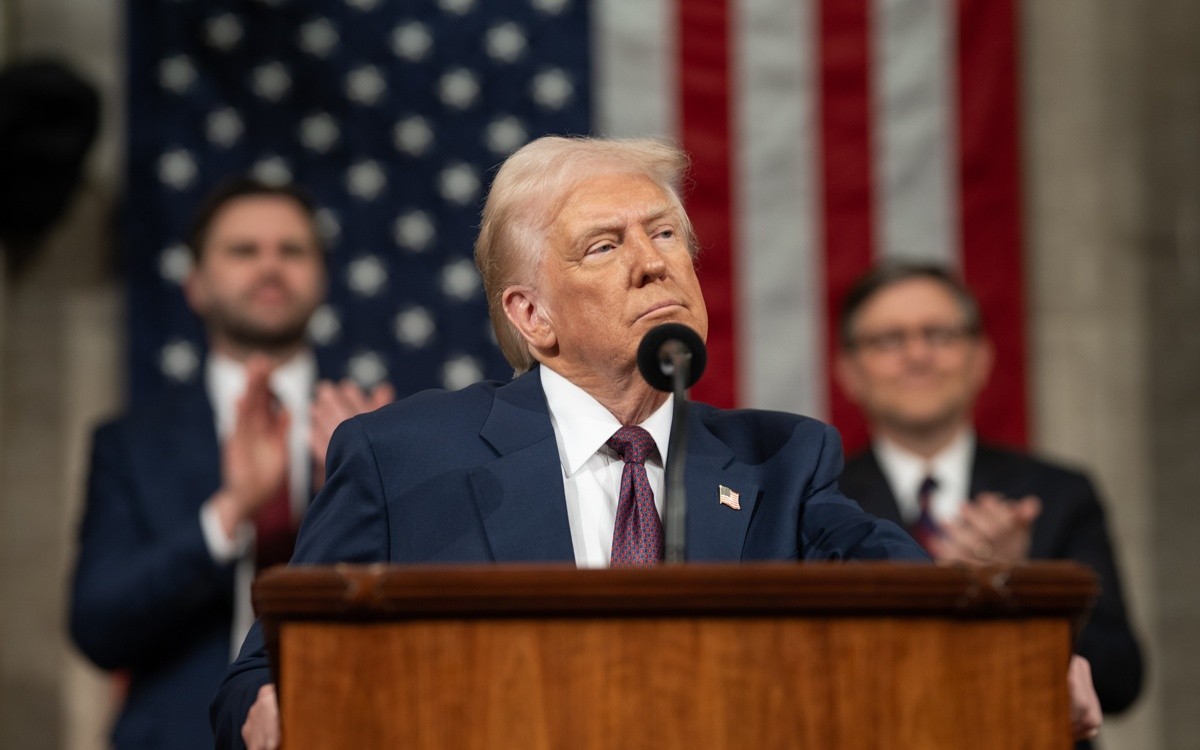
In this context, analysts at BMI, a unit of Fitch Solutions, view the election results as a precondition for intensified political confrontation and clashes between lawmakers and the executive branch. Even so, it would be premature to say the president has completely lost the ability to pursue an independent policy. The American political system leaves the head of state with substantial powers, above all in foreign policy, but using them will now be accompanied by growing resistance from Congress.
A New Political Balance of Power
Judging by the preliminary results, the Republicans’ defeat is fairly large in scale. Democrats cleared the 218-seat threshold needed for a majority in the House of Representatives and regained control of the Senate. In the most competitive states, including North Carolina, Ohio, Texas, and Maine, their candidates won victories that significantly changed the previous balance of power. At the same time, the results of some Senate races, particularly in Alaska and Michigan, had still not been finalized at the time this article was prepared.
Trump’s problem is not limited to the loss of a legislative majority. The election results showed a decline in Republican electoral support in states that had previously been considered relatively favorable to the party. The defeat of a number of candidates aligned with the president and committed to hard-line positions on Ukraine could also shift the internal balance of power within the Republican Party itself. That is especially true because, as the end of Trump’s presidential term approaches, some lawmakers may begin distancing themselves from particular administration decisions with an eye to their own political prospects. The behavior of several Republican candidates during the latest campaign points quite clearly in that direction.
For now, however, there are no grounds to expect a major split among Republicans. Trump retains significant influence over the party apparatus and electorate, and even members of Congress who disagree with him will therefore be forced to weigh the political consequences of openly confronting the president. At least in the near term.
More consequential changes will come in the work of the legislative branch. Democrats will be able to set the agenda in both chambers, chair congressional committees, and initiate investigations into the administration. They will also be able to exert substantial influence over the budget process, including funding for government programs and specific areas of foreign policy.
The coming change in House leadership is of particular importance. The most likely candidate for speaker is Democratic leader Hakeem Jeffries, a consistent supporter of expanding aid to Ukraine. His possible election would change the procedure for considering the relevant bills, which under the Republican majority depended heavily on Mike Johnson’s position and intraparty disagreements.
At the same time, Democratic control of Congress does not mean an automatic revision of presidential policy: Trump will retain his veto power, and overriding it would require the support of a supermajority of lawmakers. The most likely result, therefore, is a prolonged standoff over budgetary and legislative issues in which neither side will be able to fully carry out its own agenda. Trump will also face serious problems with presidential appointments of cabinet secretaries and other senior officials, who must be confirmed by the Senate.
Domestic Policy: The Fight Over the Budget and Economic Priorities
One of the first arenas of confrontation is expected to be social policy. Democrats intend to seek a reversal of funding cuts to Medicaid—the government health insurance program for low-income Americans—as well as the restoration of enhanced subsidies under the Affordable Care Act.
The changes adopted under the Republican majority provide for substantial limits on Medicaid spending, stricter requirements for aid recipients, and changes in funding mechanisms for health care providers. Some of the new requirements are due to take effect as early as January 2027, while the expiration of enhanced insurance subsidies has already reduced enrollment in the relevant programs and noticeably increased household spending on health insurance.
Democrats have the ability to delay individual provisions of the reform, broaden exemptions, and partially restore insurance subsidies. A full repeal of the administration’s decisions, however, is still considered unlikely. Political bargaining will center primarily on implementation timelines, funding terms, and particular categories of aid recipients.
A similar standoff is expected around federal funding for scientific research and health care. The Democratic majority intends to block cuts in appropriations for the National Institutes of Health and other government research organizations. The White House, for its part, retains the ability to influence budget execution and administrative priorities, so these disagreements could delay approval of federal spending and increase the risk of a temporary government shutdown.
In economic policy, additional importance attaches to the regulation of artificial intelligence and the construction of data centers. Democratic victories in governors’ races in a number of states, including Texas, Georgia, Ohio, and Pennsylvania, could complicate the implementation of major infrastructure projects by technology companies, since a significant share of planned computing-capacity expansion is concentrated in those states.
This means, above all, tighter environmental requirements, limits on tax incentives, and the imposition on data center operators of additional costs for power supply. In some states, restrictions on constructing new facilities are already being considered or applied. In BMI’s view, the most noticeable impact of such decisions may emerge from 2028, since a significant portion of projects slated for 2027 have already passed their main planning stages.
Still, a broad halt to AI infrastructure construction is unlikely. There is no unified position within the Democratic Party itself on what restrictions are acceptable, and technology investment remains an important driver of US economic growth overall. Higher project costs and delays in bringing some facilities online are therefore more likely, and that creates an additional problem for the Trump administration: efforts to promote large-scale investment and accelerate the industrial development of “superintelligence” may run into constraints at the state level, where presidential powers are far narrower.
Ukraine and Russia: Washington’s Changing Room to Maneuver
The most significant foreign policy consequences of the election may emerge around Ukraine. A Democratic majority in Congress, analysts believe, will be more favorably disposed toward expanding aid to Kyiv than its predecessors were. This is true above all in the House of Representatives, where opponents of further funding for Ukraine had substantial capacity to block legislative initiatives.
The situation in the Senate is somewhat different. Even under a Republican majority, the upper chamber retained fairly broad support for Ukraine, and votes on sanctions measures against Russia in 2026 were already backed by an overwhelming majority of senators.
A change of speaker will allow Ukraine’s supporters to bring to a vote initiatives on funding military aid, expanding sanctions, and strengthening oversight of administration decisions. At the same time, the emergence of a Congress more favorable to Kyiv does not guarantee a return to the scale of American support seen during Joe Biden’s presidency.
The main constraint remains at the executive level: the president will continue to determine the basic substance of foreign policy, take part in negotiations with foreign governments, and make decisions within the powers granted to him. In addition, new large-scale support programs for Ukraine may require coordination with the White House or an override of a presidential veto, for which a Democratic majority may prove insufficient.
Democrats themselves are not aligned on every instrument of pressure on Russia. In particular, Hakeem Jeffries opposed one of the 2026 sanctions bills because of the tariff mechanisms it included and the president’s authority to grant exemptions.
For US-Russia relations, this configuration creates a mixed situation. Trump will retain the ability to maintain direct contacts with Moscow through 2028, discuss the parameters of a settlement of the Ukraine conflict, and propose specific diplomatic arrangements.
But implementing any agreements reached may prove substantially more difficult. That is especially true if they involve changing statutory sanctions, allocating budget funds, or assuming long-term security commitments. In such cases, the administration will have to take Congress’s position into account, and Congress will be less inclined to support decisions perceived as unilateral concessions to Russia.
As a result, Trump’s negotiating capabilities and his ability to ensure implementation of possible agreements will increasingly diverge. The president will be able to offer Moscow certain terms, but it will be harder for him to guarantee their implementation beyond the scope of his own authority. Even agreements that do not require direct congressional approval may face additional political pressure and attempts at legislative restriction.
For Kyiv, this situation may on the whole prove more favorable than the previous one. Ukraine’s leadership will gain a partner in Congress that is more interested in continuing support and capable of constraining attempts by the administration to sharply reduce aid. At the same time, the continuing dependence on White House decisions will not fully eliminate uncertainty about future American commitments.
An opposing view is also being voiced. Trump may increase pressure on Kyiv after the US midterm elections in hopes of bringing the Ukraine conflict to an end more quickly. That opinion, in particular, was expressed by a columnist for the British newspaper The Telegraph.
“Although European leaders sometimes manage to influence him, Trump still operates on the belief that the fastest road to peace is to force Ukraine to surrender and normalize US relations with Russia,” the article says.
Outlook: Presidential Initiative and Legislative Resistance
Until the new Congress begins work in January 2027, the Trump administration formally retains the previous arrangement in its relations with the legislative branch. The political consequences of the election will appear sooner, however. Republicans will factor in worsening electoral prospects, while Democrats will prepare to revise the legislative agenda and tighten congressional oversight as they get ready for the next presidential election.
Within the United States, the main areas of confrontation are likely to be the budget, health insurance, funding for federal programs, the regulation of technology investment, as well as approaches to immigration policy and the activities of ICE. That is all the more likely because, despite the president’s veto power, Democrats will finally gain tools to make implementation of some presidential initiatives more difficult.
In foreign policy, the picture is more complicated. Trump will still have considerable independence in diplomacy and will be able to propose his own approaches to relations with Russia, Ukraine, China, and other states. But his ability to turn such initiatives into durable interstate commitments will shrink where legislative decisions or additional government spending are required.
Under these conditions, the White House will most likely make greater use of executive-branch tools and seek results that do not require complicated congressional coordination, allowing the president to preserve political initiative.
On Ukraine, the most likely outcome is stronger support for Kyiv at the legislative level while disagreements with the administration over its scale and terms persist. The US-Russia dialogue is likely to face a more difficult negotiating environment, though that does not rule out specific agreements, above all on issues that the presidents can resolve within the scope of their own authority.